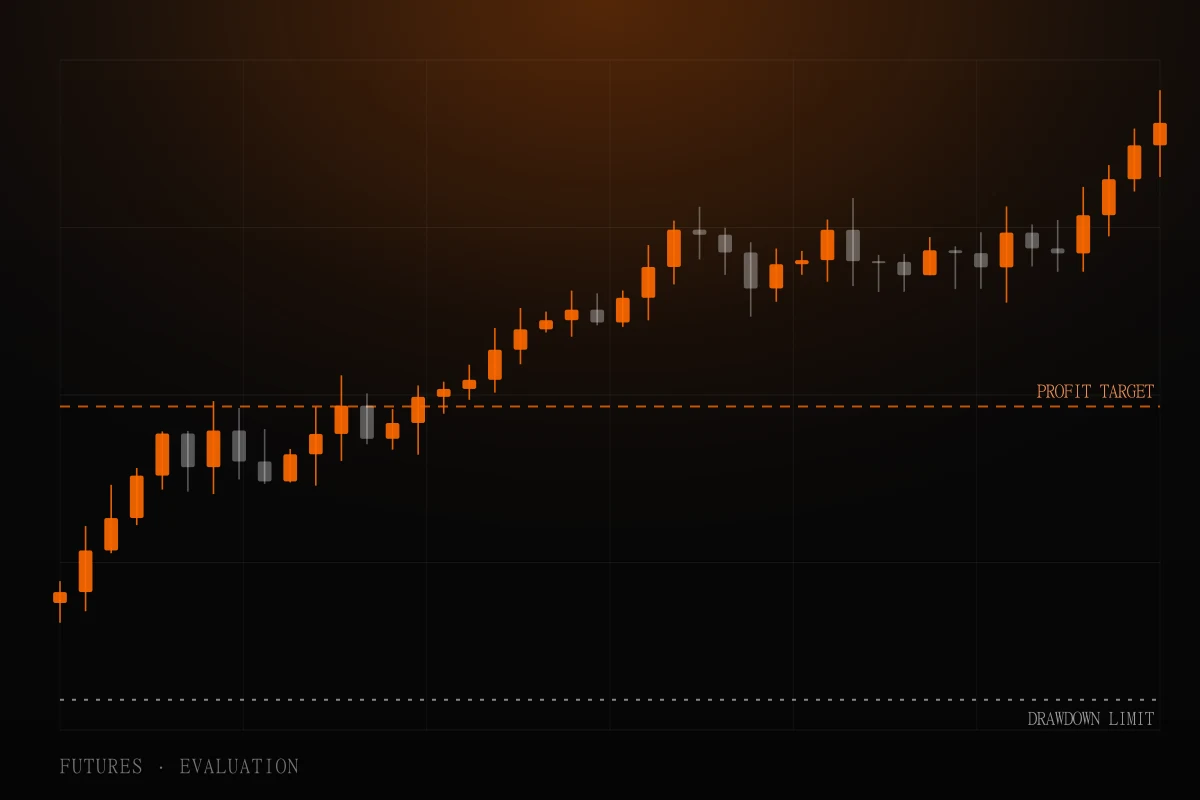
 Prop Firms
What is a futures prop firm, and is the fee worth it?
Evaluation fees are not the cost of a shortcut. Here is how the money, the rules and the payout actually work.
 Risk Management
Position sizing is the only part of trading you fully control. Here is a simple framework: risk in R, a daily cap, a three-loss rule and micro contracts while you learn.
by xStarRiverJanuary 6, 2026- 7 min read
R is the amount you are willing to lose on one trade. If you risk $200 per trade, one R is $200. Sizing in R makes every result comparable, whether you trade one micro contract or five.
It also exposes the real problem: if your average win is 0.8R and your average loss is 1R, no amount of psychology will make you profitable. The numbers have to work before the discipline can help.
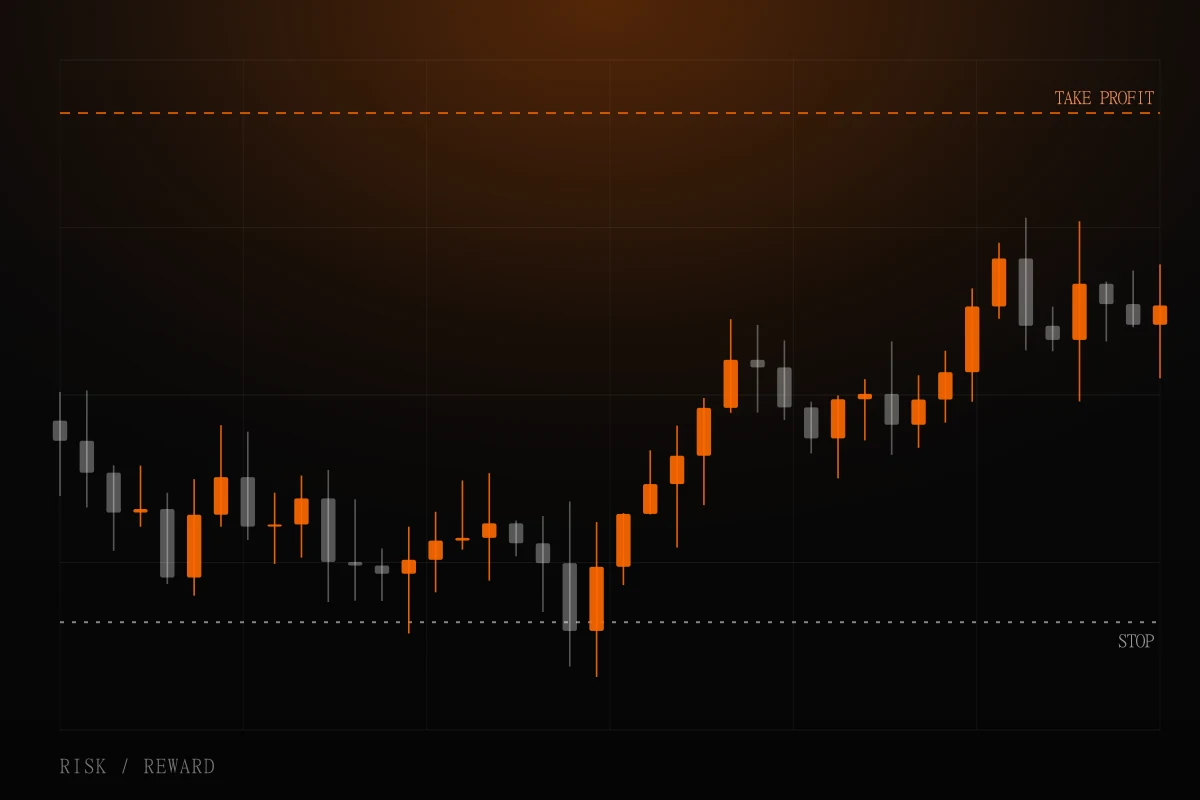
A daily loss cap of 2R to 3R is enough to trade normally and small enough that one bad day cannot end your account. The cap only works if it is checked before every entry, not after.
Write the number on the screen. When it is hit, the platform closes. No exceptions, no 'one more trade'.
0.5R–1R while you are building consistency.
2R–3R, enforced by closing the platform.
Check adherence before checking profit.
Three consecutive losses is a signal, not a coincidence. Step away for the session and review the trades: were they the same setup failing three times, or three different improvised entries?
Either answer is useful. What is never useful is a fourth trade taken to prove the first three wrong.
Micro contracts exist so that a full-size mistake costs tuition instead of rent. Trade micros until your journal shows a stable process across at least a few weeks, then scale one contract at a time.
Scaling up is not a reward for a good week. It is a consequence of a process that has held up under pressure.
You cannot control the market. You can control the size of every mistake.
Prop FirmsEvaluation fees are not the cost of a shortcut. Here is how the money, the rules and the payout actually work.
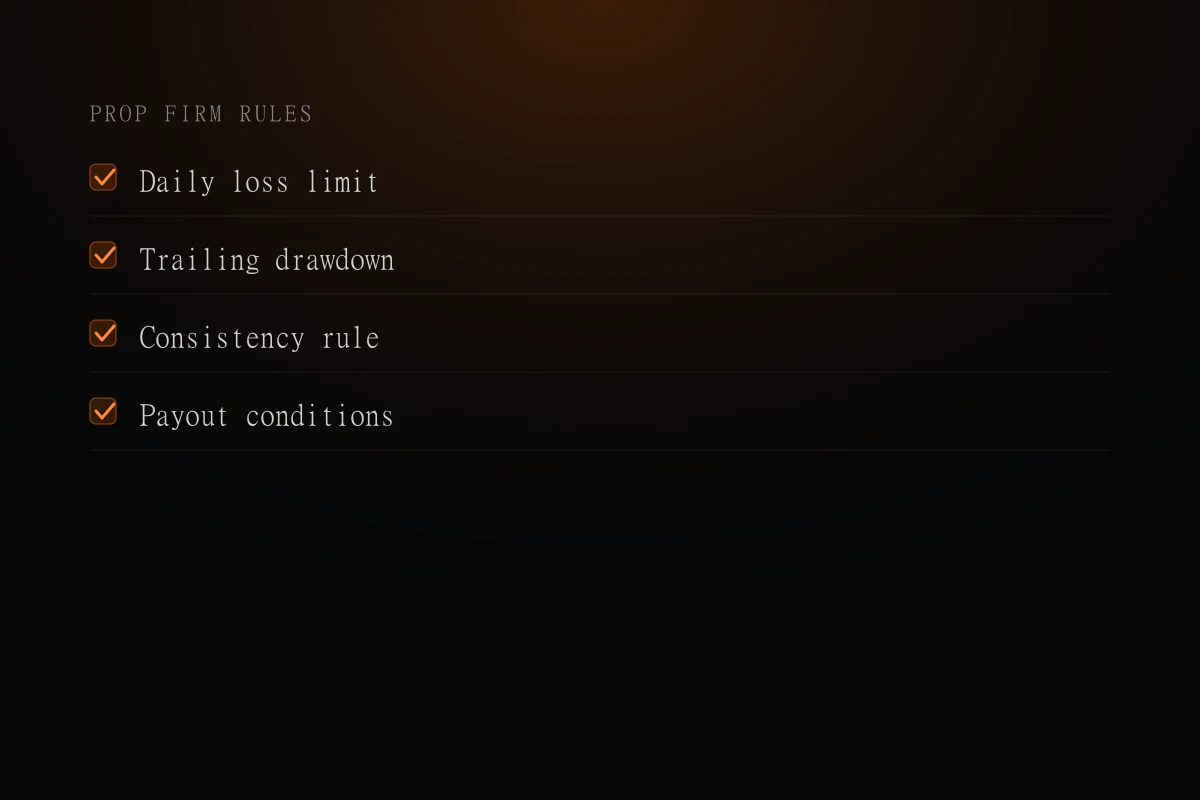 Rules
RulesDaily loss limits, trailing drawdown, consistency rules and payout conditions — the four clauses worth reading twice.
 Method
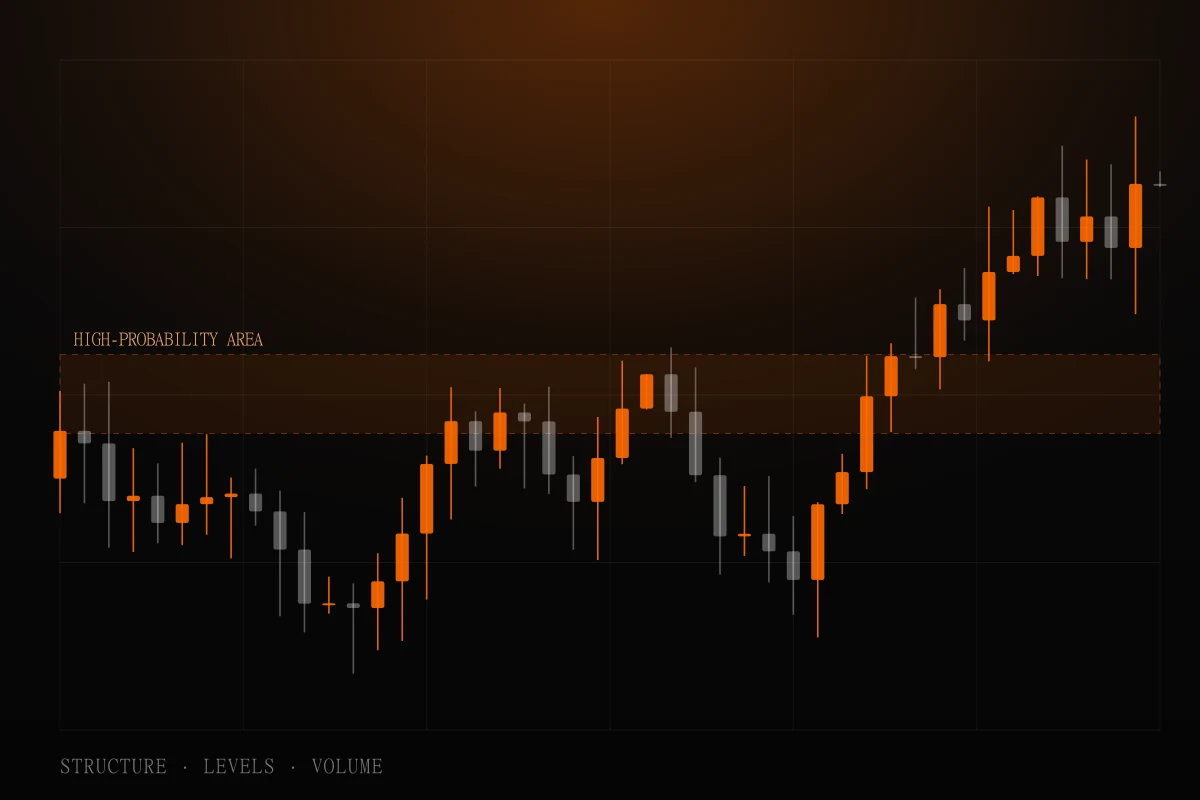
The method is not about predicting direction. It is about defining the area where you have an edge — and doing nothing everywhere else.