 Prop Firms
What is a futures prop firm, and is the fee worth it?
Evaluation fees are not the cost of a shortcut. Here is how the money, the rules and the payout actually work.
 US Stocks
A repeatable pre-market routine: news and earnings, the levels that matter, the first 30 minutes, and the days you should not trade at all.
by xStarRiverJanuary 15, 2026- 8 min read
Check the calendar first. Earnings before the open, a Federal Reserve decision, a CPI print — these change the character of the whole session. Trading a normal plan into an abnormal day is how good weeks end.
Then check overnight futures and the pre-market movers. You are not looking for a trade yet; you are building a short list of things that could matter.
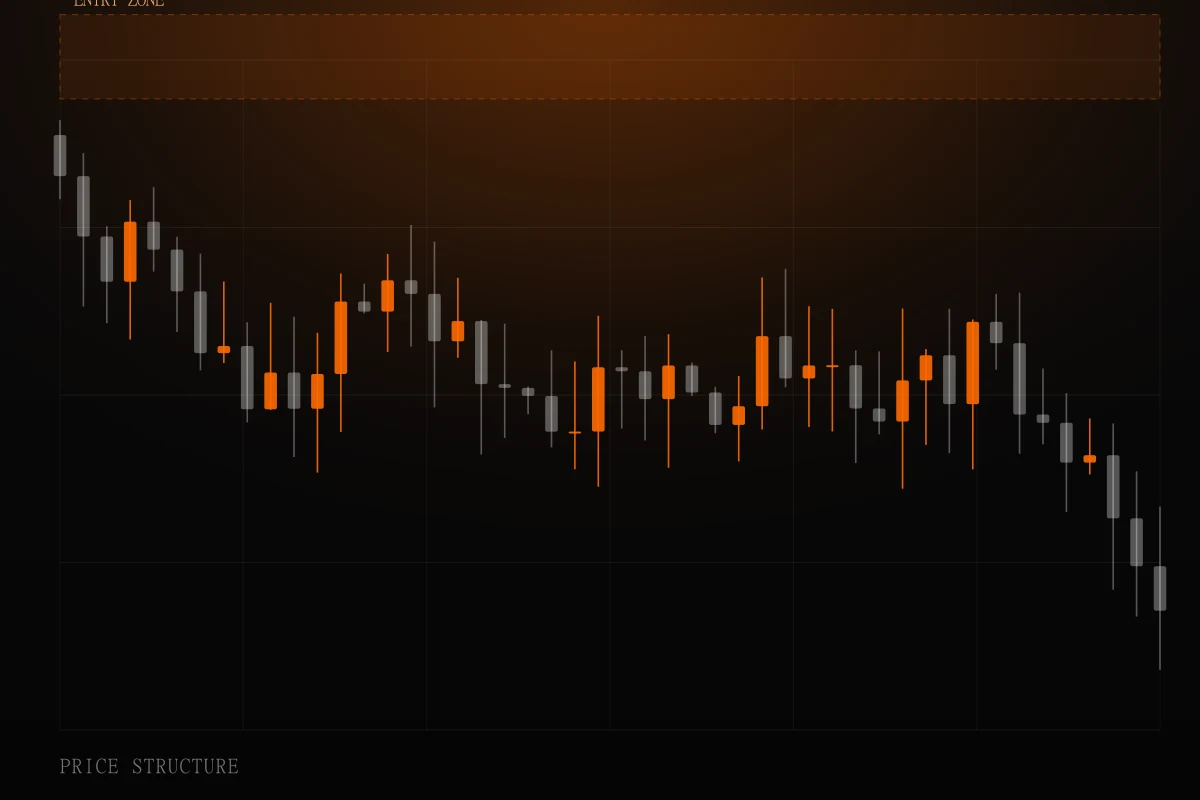
Mark yesterday's high, low and close, the overnight range, and any obvious weekly level. Keep the chart clean — if you need more than a handful of lines, you are describing, not deciding.
Then write one sentence per instrument: what you are waiting for, and what would make you stand aside. This is the part most people skip, and it is the part that pays.
The open is noisy. Spreads are wide, stops get run, and the first move is often a trap. Having a rule about the opening window — for example, no entries until the first 15-minute candle closes — removes a large share of unnecessary losses.
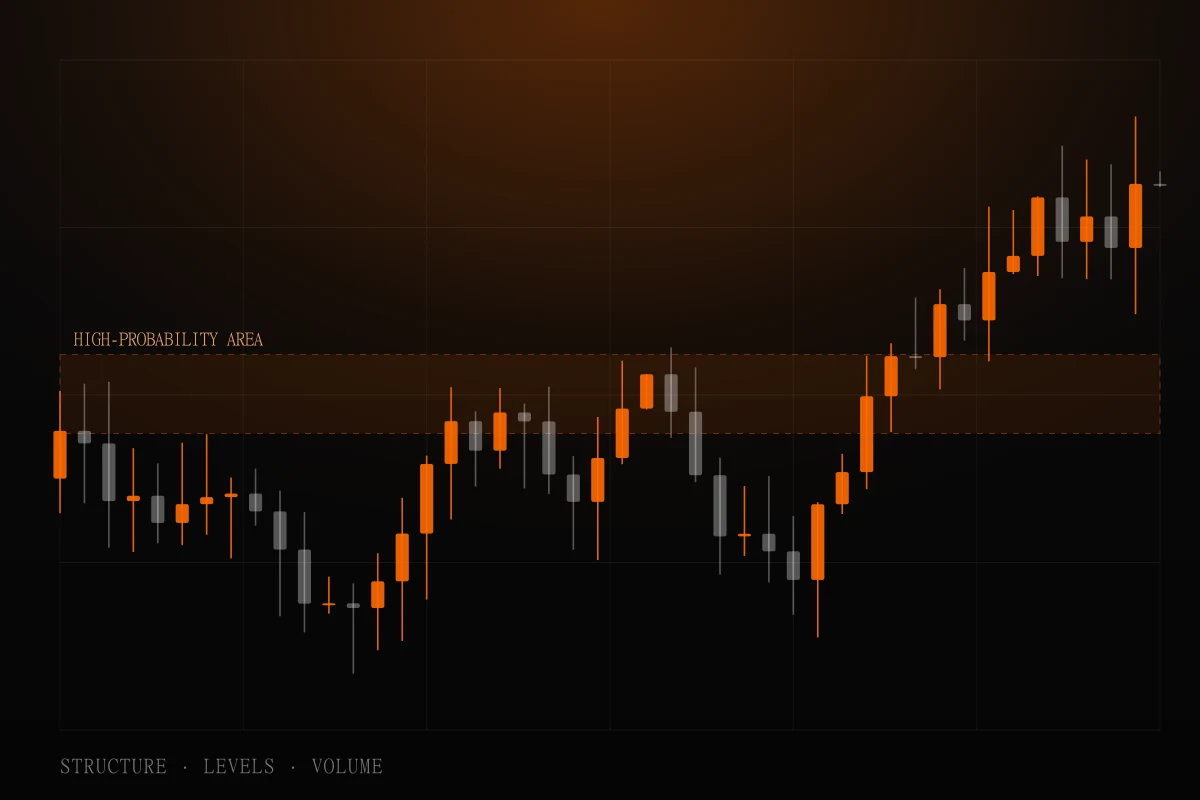
If price reaches your pre-market zone, execute. If it does not, there is no trade. Both outcomes are fine.
Let the opening auction finish before you commit risk.
A reaction at your level, not just a touch.
Two trades, then stop. The third is usually revenge.
If the market is inside a tight range with no level nearby, or if you have already hit your daily loss cap, the correct action is no action. Sitting out is a decision, and it should be written down like any other.
The traders who last are not the ones who trade every day. They are the ones who know which days are not theirs.
Some sessions pay you for showing up. Most sessions pay you for waiting.
Prop FirmsEvaluation fees are not the cost of a shortcut. Here is how the money, the rules and the payout actually work.
 Rules
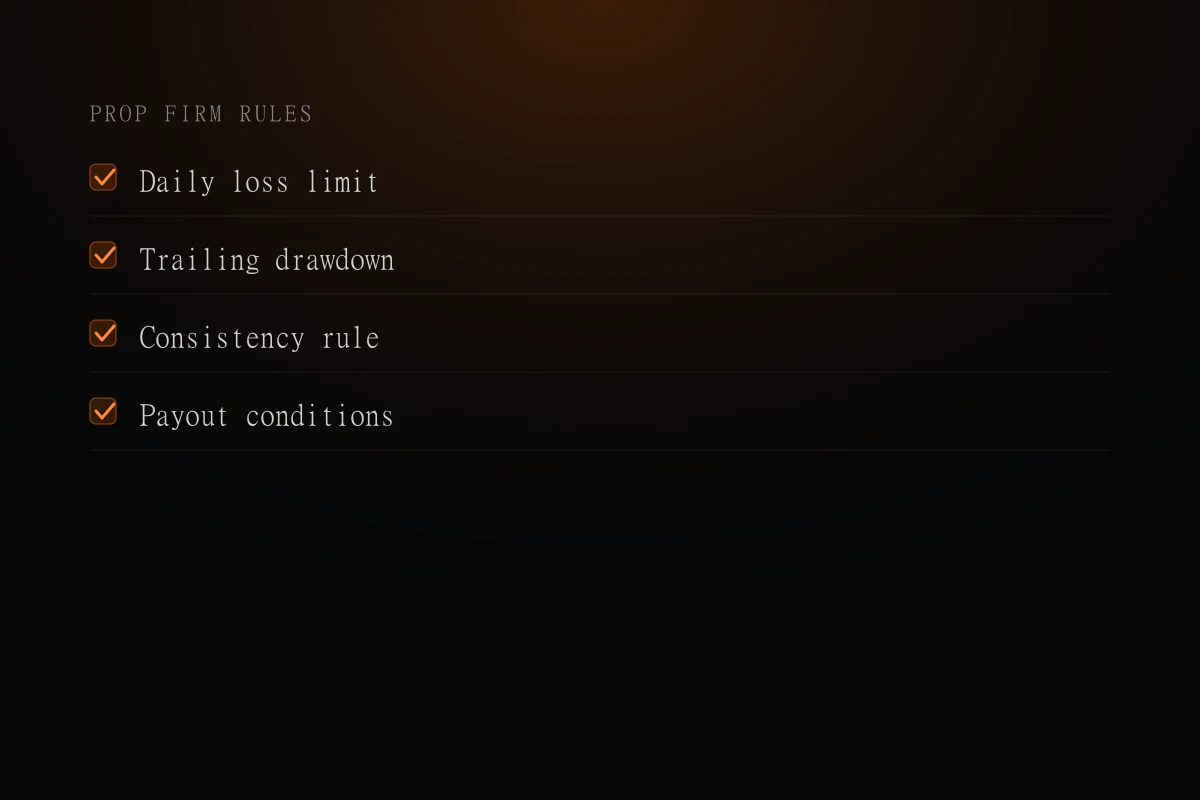
RulesDaily loss limits, trailing drawdown, consistency rules and payout conditions — the four clauses worth reading twice.
 Method
The method is not about predicting direction. It is about defining the area where you have an edge — and doing nothing everywhere else.