 Prop Firms
What is a futures prop firm, and is the fee worth it?
Evaluation fees are not the cost of a shortcut. Here is how the money, the rules and the payout actually work.
 Technical Analysis
A technical-analysis process built around one question: when should I not trade? Read the structure, define the area, wait, then execute with a fixed risk.
by xStarRiverFebruary 2, 2026- 10 min read
Most traders start by asking what the market will do next. That question has no reliable answer, and chasing it produces the same behaviour: enter early, add to losers, and call it conviction.
A better question is: where would a trade make sense, and what would prove me wrong? That is a question you can answer before the market opens, and it turns trading from a guessing game into a waiting game.
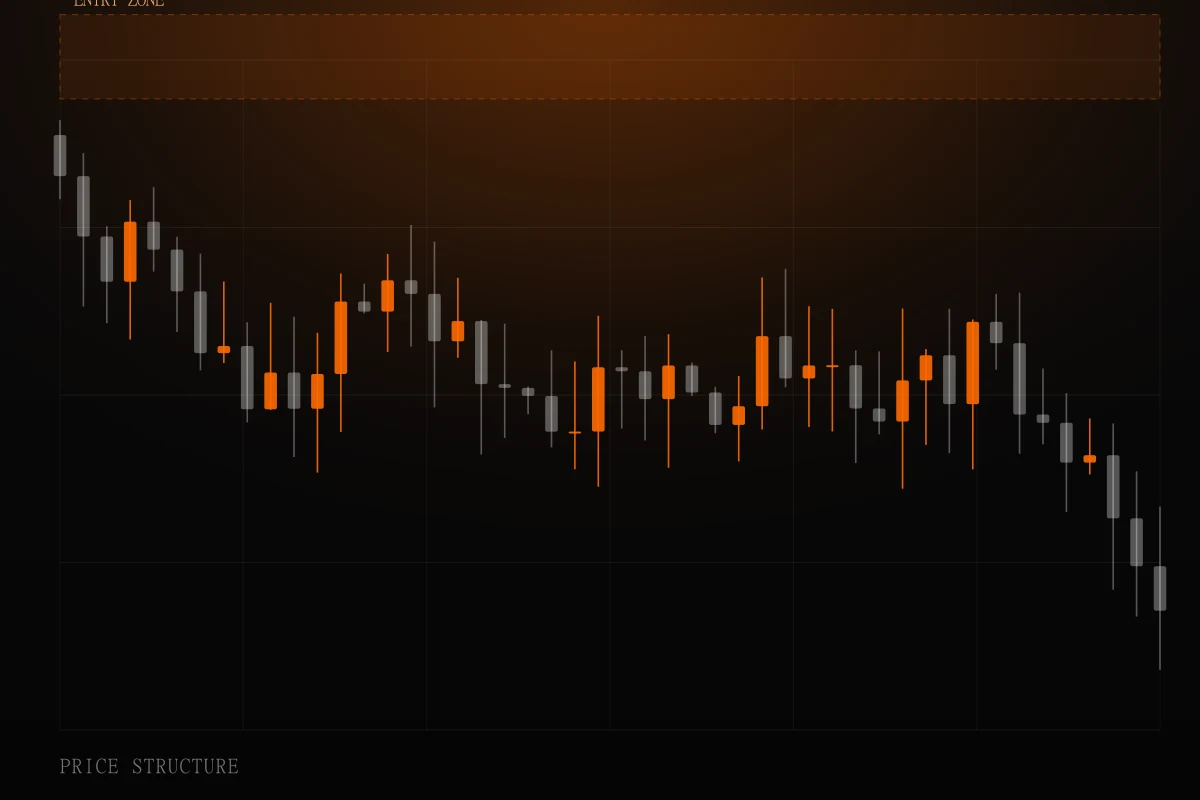
Structure tells you what kind of market you are in. Higher highs and higher lows is a trend; a range is a market that has not decided; a failed break is a market that just told you something.
I mark the obvious levels first — the ones visible without zooming in — then the volume behaviour around them. If I cannot describe the current structure in one sentence, I do not have a trade yet.
Directional, with clean pullbacks you can wait for.
Fade the edges or wait; do not buy the middle.
The most useful signal, and the easiest to over-trade.
The high-probability area is a price zone where several things agree: a level that matters, a reaction you have seen before, and a risk that is small enough to size properly. If the stop has to be wide to survive normal noise, it is not a high-probability area — it is a guess.
Write the zone down before the session. If price never reaches it, you do not trade. That single rule removes most of the damage traders do to themselves.
Once price is in the area, execution is mechanical: fixed risk, defined invalidation, no adding to losers. The trade either works or it does not, and both outcomes are useful because they were planned.
Afterwards, the journal entry matters more than the result. Did the trade come from the plan or from boredom? A profitable impulse trade is still a mistake, and it will cost you eventually.
The edge is not in the entry. It is in everything you refuse to trade.
Prop FirmsEvaluation fees are not the cost of a shortcut. Here is how the money, the rules and the payout actually work.
 Rules
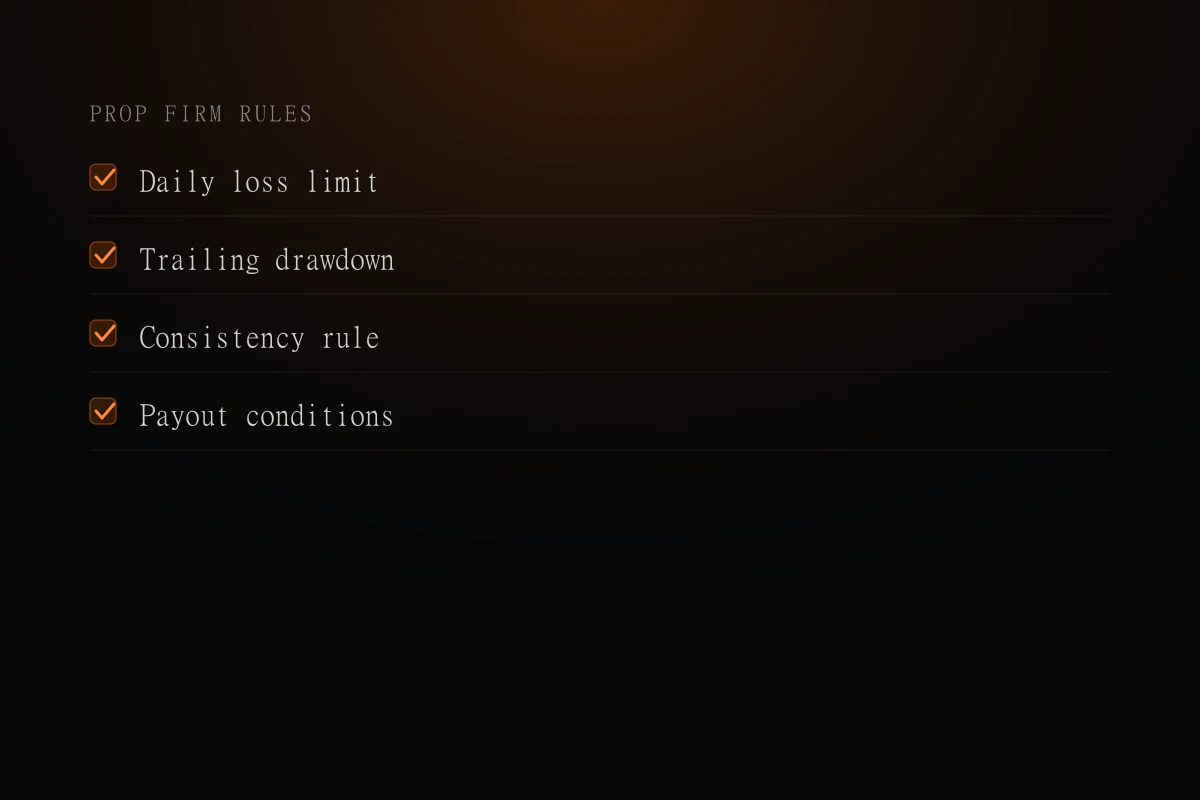
RulesDaily loss limits, trailing drawdown, consistency rules and payout conditions — the four clauses worth reading twice.
 Process
Most journals are diaries. Five fields turn yours into a feedback loop you can act on.